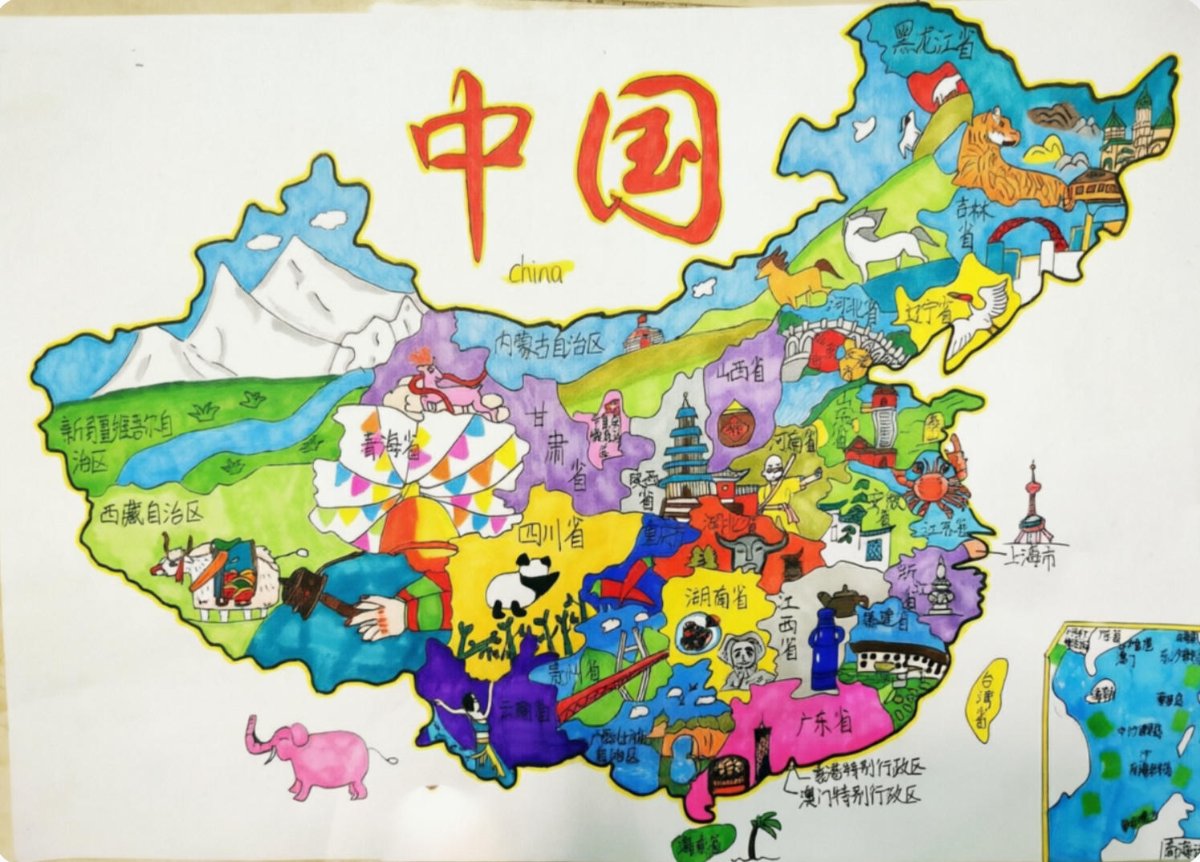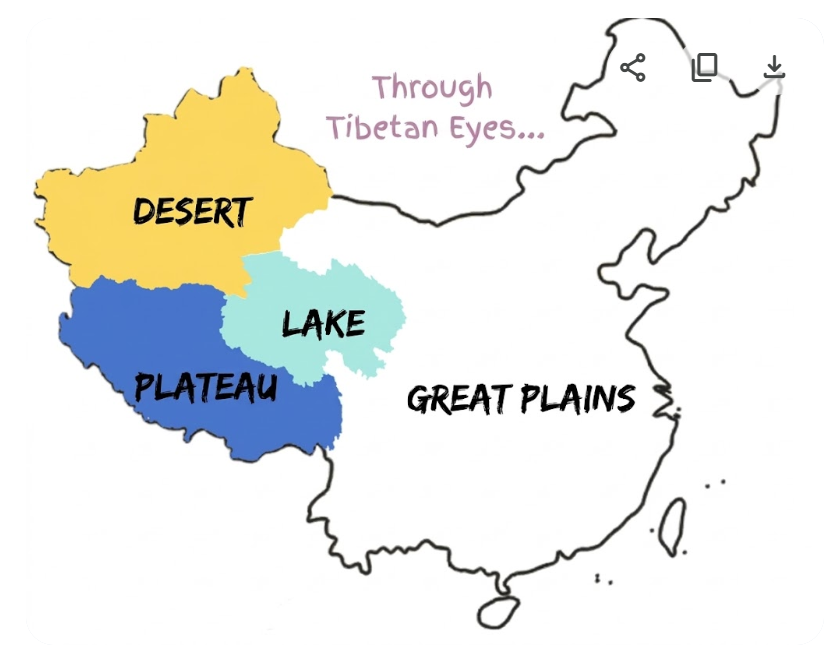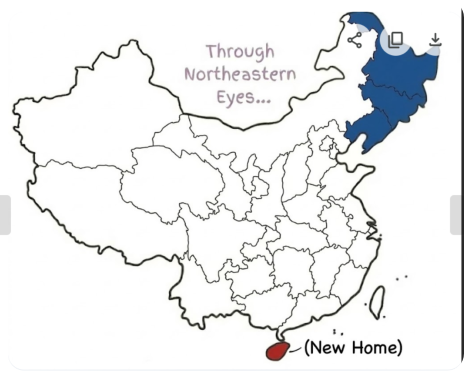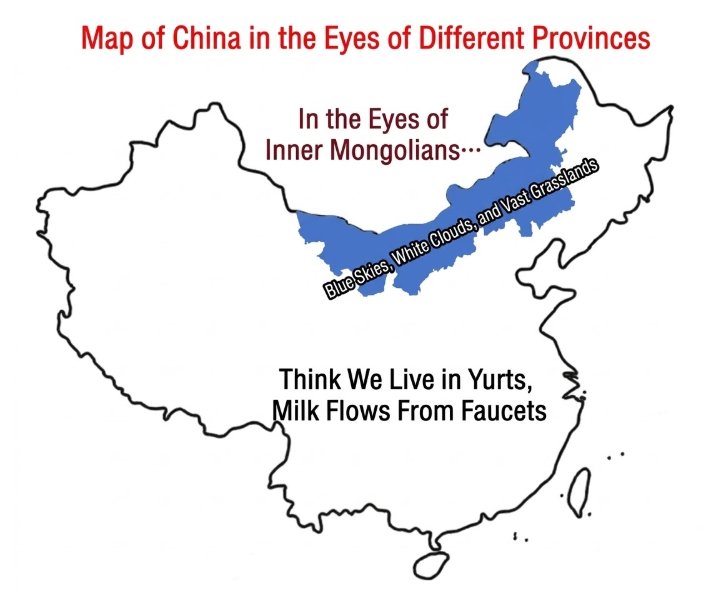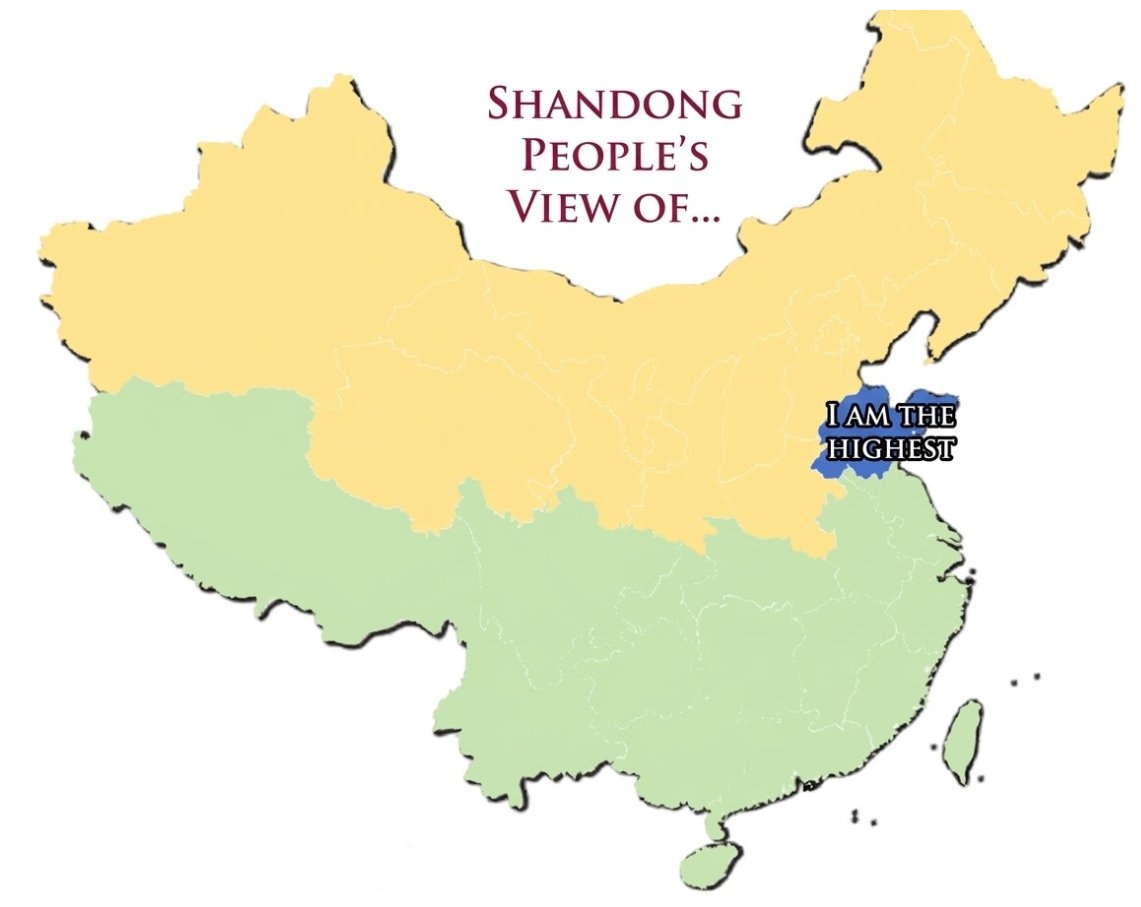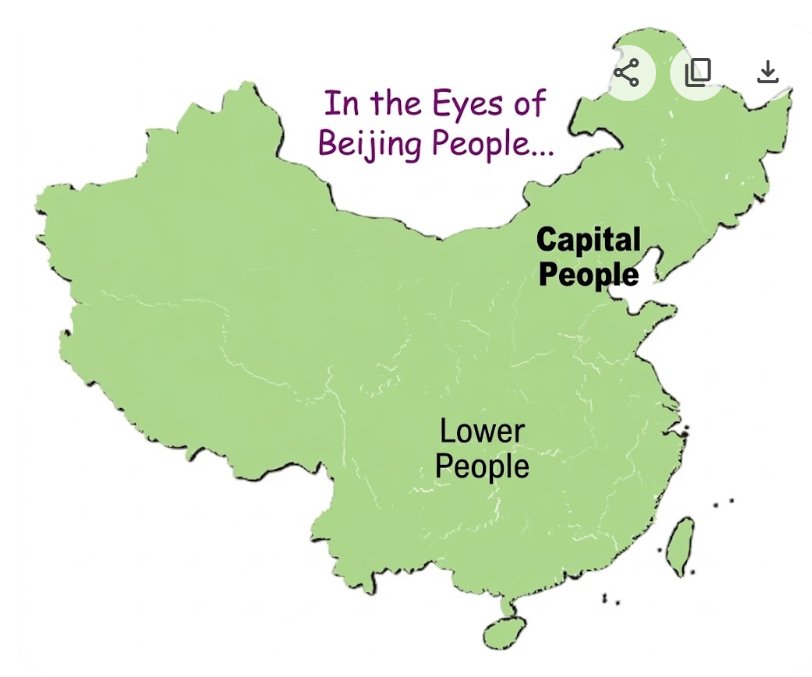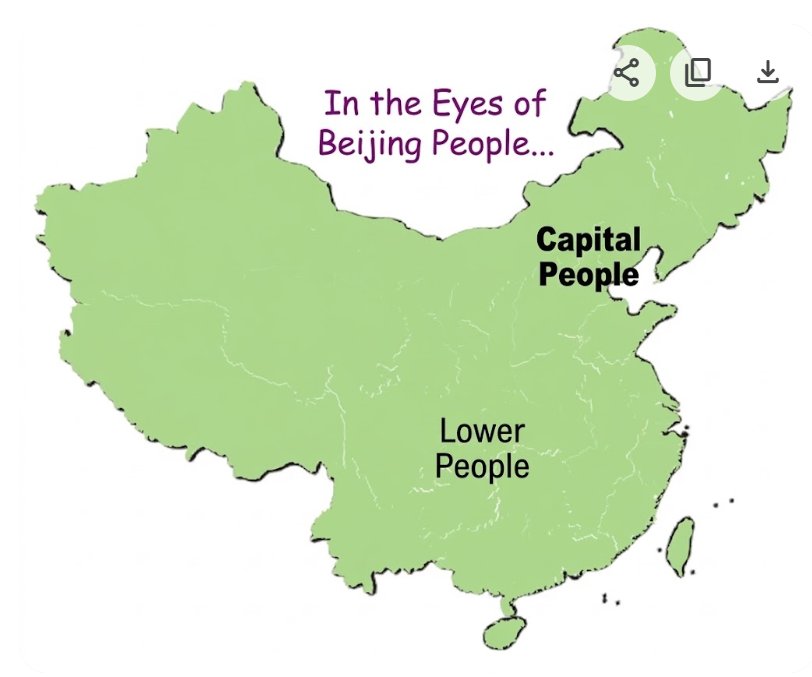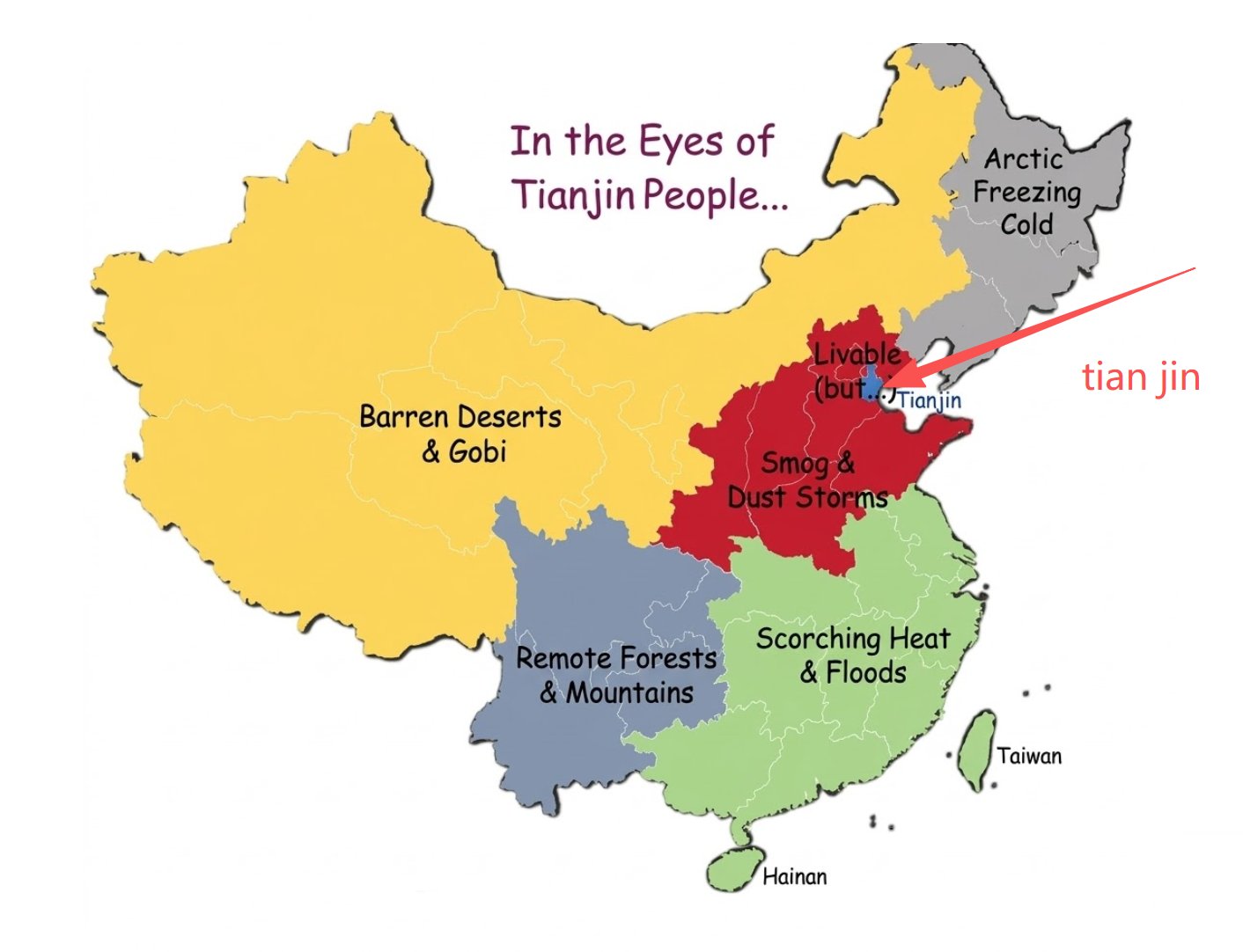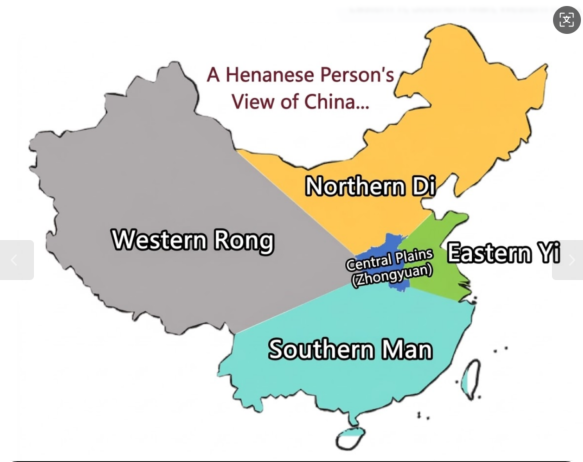
In the worldview of many people from Henan, the map of China looks something like this:
the blue patch in the middle is the Central Plains①, meaning their hometown;
to the north are the “Northern Di,” to the east the “Eastern Yi,” to the south the “Southern Man,” and to the west the “Western Rong②.”
This isn’t arrogance — it’s the deeply ingrained Central Plains complex. After all, the word “China” originally referred to the area around Luoyang③, so the confidence comes straight from the ancestors.
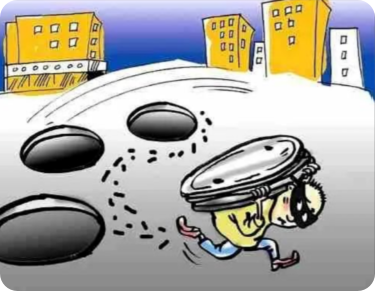
Outsiders love to joke about Henan, and the most famous meme is the so-called “manhole cover stealing”⑧ joke.
People from Henan have long learned to laugh at themselves:
“Each of us owns a manhole cover — we use it to cover the antiques underground.
After all, if you dig anywhere, you might hit bronze ware or terracotta figures, and those are worth more than the cover.”
The saying “For underground relics, look to Henan” isn’t an exaggeration.
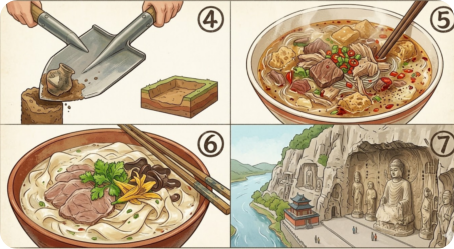
Even the famous Luoyang shovel④ became a standard tool in archaeology.
When it comes to food, Henan people have carved the idea of hearty and practical into their stomachs.
In the morning, a bowl of Hu La Tang⑤, paired with fried dough bread, spicy enough to wake the soul.
At noon, a bowl of Hui Mian⑥, wide noodles soaked in rich broth, with meat flavor wrapped around the aroma of wheat — even the soup gets finished.
Visitors often ask, “Do you really eat Hu La Tang every day?”
Henan people just smile:
“How else could we survive the cold winds of the Central Plains?”
They also love the word “Zhong” (中) — a universal answer.
“Eat Hui Mian at noon?” — “Zhong!”
“Go see the Longmen Grottoes⑦?” — “Zhong!”
“Stop making fun of us?” — “… Zhong or not?”
Inside this single word lies the straightforwardness and easygoing nature of Henan people,
and also the calm confidence of living in the land at the center of the world.
Today’s Henan is no longer the stereotypical agricultural province.
Zhengzhou’s high-speed rail network connects the entire country,
Luoyang’s peonies amaze visitors from around the world,
and Kaifeng’s night markets are full of lively street-food culture.
While joking about being “rustic,” Henan people are also reinventing Central Plains culture —
TV galas from Henan have gone viral online, using dance, music, and visual effects to bring the Tang and Song dynasties back to the stage,
showing the whole country that the roots of the Central Plains have never been broken.
For people from Henan, the joke about
“Eastern Yi, Southern Man, Western Rong, Northern Di”
is nothing more than affection for their homeland.
They know that the center of the world has never been just a geographical concept —
it is a cultural identity carved into the bones.
No matter how far they travel, a simple word — “Zhong” — is the signal that they are home.
Notes & Background
① Central Plains (Zhongyuan)
In a narrow sense, the Yellow River middle-lower basin centered on Luoyang (mostly in modern Henan).
It is one of the core birthplaces of Chinese civilization and was the political, economic, and cultural center for much of history.
② Eastern Yi, Southern Man, Western Rong, Northern Di
Ancient terms used by early Central Plains states to refer to surrounding tribes in the four directions.
They are historical labels, not modern ethnic concepts, and are used here humorously.
③ The earliest meaning of “China”
The Western Zhou bronze inscription on the vessel He Zun contains the phrase “dwelling in Zhongguo,”
the earliest known use of the word, referring to the region around Luoyang.
④ Luoyang Shovel
A tool invented by tomb raiders in Luoyang to probe soil layers and locate underground structures.
It was later adopted by archaeologists and became a symbolic reference to Henan’s rich underground relics.
⑤ Hu La Tang
A classic Henan breakfast soup made with pepper, chili, meat, gluten, and vermicelli.
Spicy, thick, and warming — considered the soul of a Central Plains morning.
⑥ Hui Mian
A signature Henan noodle dish cooked in rich bone broth, often with lamb, mushrooms, and vegetables.
Filling, strong-flavored, and very substantial.
⑦ Longmen Grottoes
Located in Luoyang, one of the Three Great Grottoes of China.
Carved from the Northern Wei to Tang dynasty, now a UNESCO World Heritage site.
⑧ The “manhole cover” stereotype
A regional stereotype originating from isolated theft cases in the late 20th century that were unfairly generalized online.
It even led to real-world hiring discrimination, despite laws guaranteeing equal employment.
Most migrant workers from Henan are hardworking and law-abiding,
and self-deprecating humor is often used to soften the prejudice.